.png)

FIFA World Cup 2026 Hospitality Revenue Strategy: How Hotels Can Maximize Revenue, Prevent Revenue Leakage, and Leverage AI-Powered Revenue Intelligence
Updated: Jun 20

By SUSTAINEVOLVE, AI Transformation Series | Hospitality Edition | June 2026
Partner Disclosure
This article is part of the SUSTAINEVOLVE Hospitality AI Transformation Series and may include sponsored content or affiliate links. We may receive compensation from featured partners; however, all analysis and recommendations are independently developed.
The FIFA World Cup 2026 will create one of the most volatile demand environments in modern hospitality history, with cities across Mexico, the United States, and Canada experiencing extreme occupancy surges, compressed booking cycles, and rapid pricing fluctuations.
For hotels, resorts, and short-term rentals, this represents both a major opportunity and a significant financial risk.
Without real-time revenue intelligence systems, hospitality operators risk losing potential revenue during peak demand periods.
This loss is not caused by lack of demand, it is caused by slow pricing systems and fragmented operational infrastructure.
The Core Problem: Revenue Lag in Hospitality Systems

Most hospitality businesses still rely on outdated revenue workflows:
Manual pricing updates
Disconnected OTA channels
Static availability management
Delayed demand response cycles
During high-demand events like FIFA 2026, this structure fails because demand changes faster than human decision-making cycles.
This creates 3 critical issues:

Missed high-value booking windows
Underpricing during peak demand spikes
Revenue inconsistency across distribution channels
In high-velocity markets, even a 6–12 hour delay in pricing adjustment can significantly impact total revenue performance.
Understanding Revenue Leakage Loss Impact

Revenue leakage in hospitality is not a single event, it is a cumulative system failure.
It typically occurs through:
Static pricing during demand surges
Lack of synchronization across OTAs
Delayed response to competitor pricing shifts
Inefficient inventory allocation
During FIFA 2026, these inefficiencies are amplified due to:
Sudden international travel inflows
Match-based demand clustering
City-specific occupancy spikes
Short booking windows (last-minute demand surges)
As a result, hotels often fail to capture premium pricing opportunities during peak periods.
The Solution: AI-Enabled Revenue Intelligence Layer
To address this challenge, leading hospitality operators are shifting toward AI-enabled revenue systems built on real-time infrastructure.
An example of this system is Lodgify which functions as the Revenue Intelligence Layer, enabling centralized control over:
Pricing strategy
Booking distribution
Channel synchronization
Availability management
Revenue tracking
However, its true value is unlocked when integrated into a broader AI ecosystem.
⚡ How Real-Time Revenue Systems Work During FIFA 2026
Consider a hotel in Mexico City during a major FIFA match weekend.

Without AI systems:
Pricing updates happen manually
OTA channels update with delays
High-demand windows are missed
Revenue remains static during spikes
With an AI-enabled revenue layer:
Demand surge is detected in real time
Pricing automatically adjusts based on booking velocity
OTA channels synchronize instantly
High-value inventory is repriced dynamically
Revenue forecasts update continuously
This transforms pricing from a static function into a real-time optimization system.
Key Capabilities of AI Revenue Intelligence Systems
When Lodgify is integrated into an AI ecosystem, hotels gain:
1. Dynamic Pricing Automation
Rates adjust automatically based on:
· Demand spikes
· Occupancy levels
· Market competition
· Event-driven demand (e.g., FIFA matches)
2. Predictive Revenue Forecasting
Hotels can anticipate:
· Occupancy peaks before they occur
· High-value booking windows
· Low-demand periods requiring optimization
3. Channel Optimization
All booking platforms remain synchronized in real time, preventing:
· Pricing inconsistencies
· Overbooking risks
· Revenue fragmentation
4. Revenue Leakage Detection
AI systems continuously identify:
· Underpriced inventory
· Missed upselling opportunities
· Delayed pricing updates
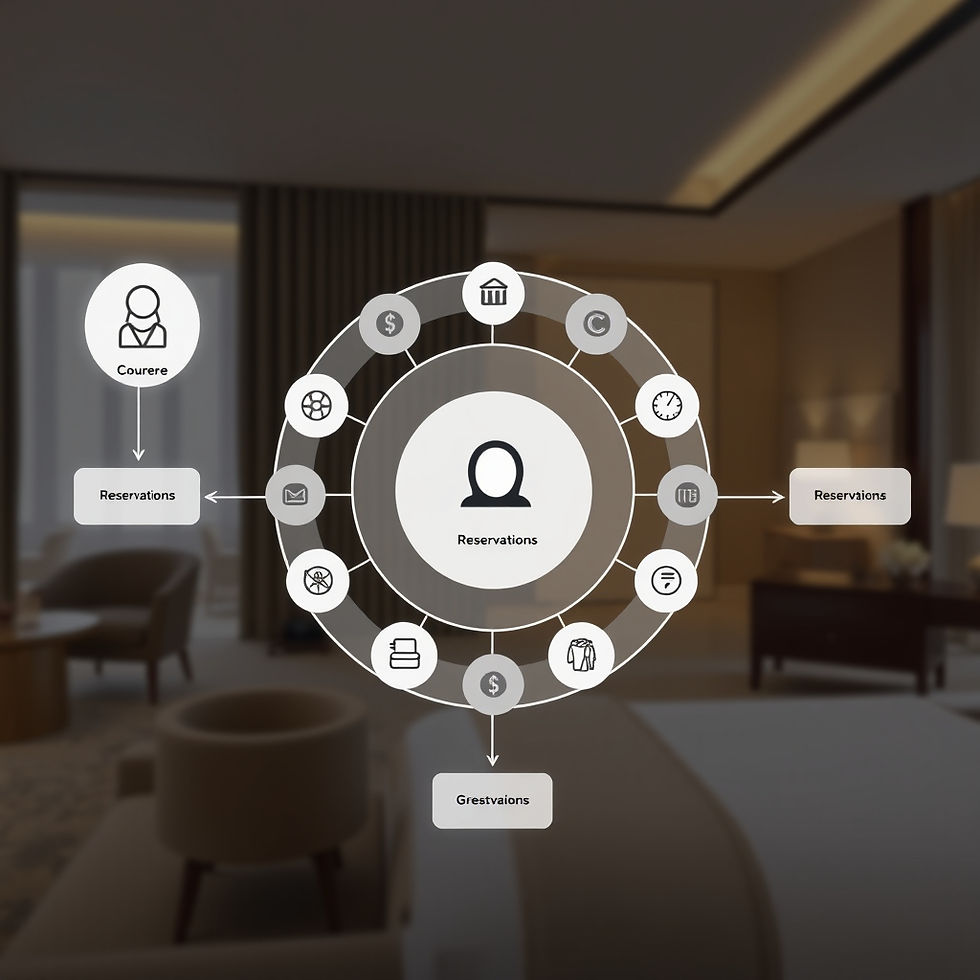
Revenue Intelligence as Part of a Larger Ecosystem
Revenue systems do not operate in isolation. They are part of a larger AI hospitality architecture:
Revenue Layer → Pricing & bookings.
Platform Example: Lodgify

Guest Layer (Digital Experience & Automation)
Platform example: Softr
Used for:
Guest portals
Digital concierge experiences
Booking dashboards
Self-service guest workflows
Operations Layer → Workflow automation

AI Layer → System-wide intelligence and Agentic AI
Platform Example: ClickUp
Used for:
Task automation
Housekeeping coordination
Staff scheduling
Operational visibility
AI orchestration layer using agent-based automation and predictive analytics(e.g., forecasting demand, pricing signals, guest behavior insights)
Together, these layers create a self-optimizing hospitality ecosystem.

⚠️ Strategic Risk: Hotels Without AI Revenue Systems
Hotels that do not adopt real-time revenue intelligence systems will experience:
Lower RevPAR during peak events
Increased reliance on manual pricing decisions
Inconsistent OTA performance
Missed revenue optimization windows
Over time, this leads to structural competitive disadvantage during high-demand global events.

❓ Revenue Readiness Questions
Hospitality leaders should evaluate:
Can your pricing system respond within minutes to demand changes?
Are all booking channels fully synchronized in real time?
Are you capturing maximum value during peak demand periods?
Do you have visibility into revenue leakage today?
If not, your revenue system is operating below optimal performance for high-demand environments like FIFA 2026.
Final Insight
Hospitality revenue optimization is no longer a manual pricing exercise.
It is a real-time intelligence challenge driven by data, automation, and system integration.
Hotels that adopt AI-enabled revenue layers will not only protect revenue during FIFA 2026, they will redefine their competitive position in the hospitality market.
Continue Learning
To explore how revenue systems connect with guest experience, operations, and AI orchestration, continue the full ecosystem framework:
Ready for FIFA World Cup 2026?
The World Cup will not simply test occupancy capacity. It will test the effectiveness of your revenue systems, operational workflows, guest experience infrastructure, and AI readiness.
If your organization is experiencing:
• Revenue leakage
• Disconnected hospitality systems
• Manual operational processes
• Guest communication bottlenecks
• Pricing inefficiencies
• Lack of AI adoption
• Difficulty scaling during peak demand periods
Now is the time to act.
Next Step
If you are still catching up to prepare your property for FIFA 2026 or similar high-demand events, you can:
Schedule a personalized consultation to assess your organization's readiness for FIFA World Cup 2026 and identify opportunities for:
✓ Revenue optimization
✓ Hospitality AI transformation
✓ Systems integration
✓ Guest experience automation
✓ Operational intelligence
✓ AI-powered revenue operations
Discover how an integrated AI-enabled hospitality ecosystem can help your organization maximize revenue, improve guest satisfaction, and operate more efficiently during major demand events.
About SUSTAINEVOLVE

Esperanza Arellano, is the Founder & CEO at SUSTAINEVOLVE. She combines deep hospitality operations experience with nearly two decades of technology transformation leadership.
She has spent almost a decade working directly within hospitality revenue operations teams, helping organizations improve occupancy performance, revenue optimization, and operational effectiveness.
In addition, she brings more than 18 years of experience leading technology go-to-market, revenue operations, digital transformation, and AI adoption initiatives.
Her specialization focuses on helping organizations modernize operations through AI-enabled systems and integrated business processes.
Professional Credentials:
Her work focuses on helping hospitality organizations identify revenue leakage, eliminate system fragmentation, improve operational efficiency, and build practical AI transformation roadmaps.
Schedule a personalized consultation to assess your organization's readiness for FIFA World Cup 2026 and identify opportunities for:
✓ Revenue optimization
✓ Hospitality AI transformation
✓ Systems integration
✓ Guest experience automation
✓ Operational intelligence
✓ AI-powered revenue operations
Discover how an integrated AI-enabled hospitality ecosystem can help your organization maximize revenue, improve guest satisfaction, and operate more efficiently during major demand events.


Comments