.png)

Strategies for Navigating High-Demand Events Like the FIFA World Cup 2026: Transforming Hospitality Management with AI
Updated: Jun 20
Partner Disclosure
This article is part of the SUSTAINEVOLVE Hospitality AI Transformation Series and may include sponsored content or affiliate links. We may receive compensation from featured partners; however, all analysis and recommendations are independently developed.

Executive Context: FIFA World Cup 2026 as a Hospitality Operations Demand Test
The FIFA World Cup 2026 will bring an unprecedented surge in hospitality demand, challenging hotels, resorts, and vacation rentals to deliver exceptional guest experiences while managing complex operations and maximizing revenue. Traditional hospitality systems often struggle during such high-demand events due to fragmented technology, revenue leakage, operational bottlenecks, and overwhelmed guest communication channels. This article outlines a layered AI-enabled hospitality ecosystem designed to help hospitality executives, property managers, and technology leaders meet these challenges head-on.
The FIFA World Cup 2026 will create one of the most intense hospitality demand surges in modern history across Mexico, the United States, and Canada.
Hotels, resorts, and short-term rentals will experience:
Extreme occupancy spikes
Rapid pricing volatility
Short booking windows
Operational overload
Increased guest communication pressure
This is not simply a demand increase.
It is a system stress test of hospitality infrastructure.

Why Traditional Hospitality Systems Struggle During High-Demand Events
High-demand events like the FIFA World Cup create intense pressure on hospitality systems. Many hotels rely on disconnected platforms for revenue management, guest communication, and operations. This fragmentation leads to:
Revenue leakage due to inconsistent pricing and poor channel synchronization.
Operational bottlenecks as housekeeping, maintenance, and staffing struggle to keep pace.
Guest communication overload with manual handling of onboarding, requests, and concierge services.
System fragmentation that prevents real-time data sharing and coordinated responses.
For example, during the World Cup, hotels near stadiums face sudden occupancy spikes and rapid pricing changes. Without integrated systems, they risk losing revenue opportunities and delivering poor guest experiences.
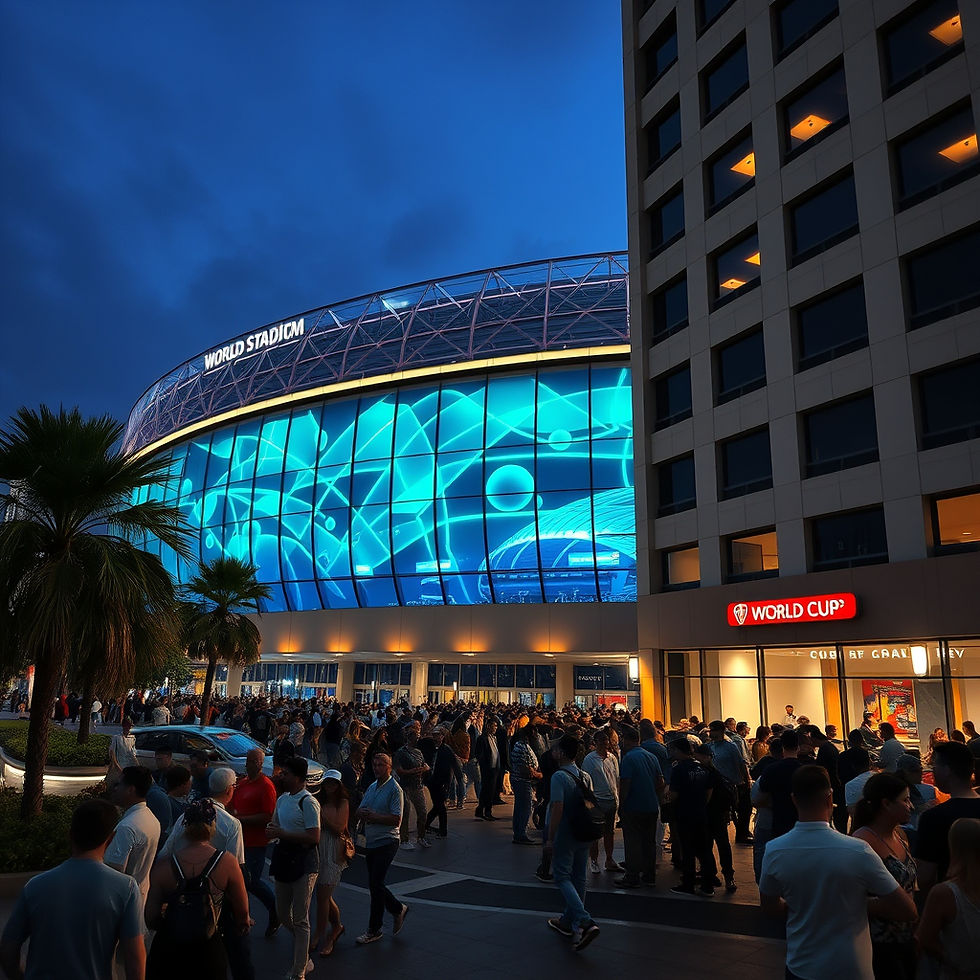
Fragmented Hospitality Systems
Most hospitality businesses still operate through disconnected tools:
Revenue management in one system
Guest communication in WhatsApp or email
Operations in spreadsheets
Pricing decisions made manually
This fragmentation leads to:
Revenue leakage
Operational inefficiencies
Delayed decision-making
Poor guest experience under pressure
Quick Assessment Operational Questions
What is Your hotel Revenue Readiness for the World Cup 2026?

Are your prices updated in real time across all channels?
Are you confident you are not losing revenue during peak demand periods?
Guest Experience
Can your guest communication scale without overwhelming staff?
Are guest requests still managed manually?
Operations
Can your team handle sudden occupancy spikes without chaos?
Are housekeeping and maintenance workflows automated?
If you answered “NO” to at least one of the above: Your hotel might be exposed to revenue leakage during FIFA 2026 demand surges. Keep reading to gain a few insights.
A Practical Solution Approach
4-Layer Revenue Hospitality Ecosystem Framework
Modern hospitality is no longer tool-based. It is system-based, AI-orchestrated, and real-time adaptive.
A layered AI-enabled ecosystem can unify revenue, guest experience, and operations while orchestrating AI-driven automation. The framework includes:
Layer 1: A Central Revenue Intelligence Layer

A central revenue infrastructure layer focuses on maximizing revenue through dynamic pricing, channel management, and occupancy forecasting.
Managing multiple online travel agencies (OTAs) and direct booking channels.
Adjusting prices dynamically based on demand signals, such as World Cup match schedules.
Synchronizing availability and rates across platforms to prevent overbooking.
Forecasting occupancy to optimize staffing and inventory.
For instance, Lodgify can increase room rates during peak match days while offering discounts on off-peak days, balancing occupancy and revenue by providing:
Direct bookings
OTA distribution (Airbnb, Booking.com, etc.)
Pricing strategy
Availability synchronization
Revenue tracking
⚡ FIFA 2026 Revenue Pressure Scenario For Hotels

⚡During World Cup demand surges:
Prices must change daily or hourly
Occupancy shifts unpredictably
Demand spikes occur per match schedule
Without integration:
Revenue is lost due to static pricing
Channels become misaligned
Booking opportunities are missed

AI Enhancement Offers Multiple Advantages
Dynamic pricing adjusts in real time

Demand forecasting improves accuracy

Revenue leakage is automatically detected

Revenue Readiness Check
Can your pricing respond to demand in real time?
Are you maximizing revenue during peak events?
If your answer was no, your hotel is likely losing revenue during peak demand periods.
Learn how leading hotels are transforming operations using AI systems.
You will discover:
Revenue optimization strategies during demand spikes
Guest experience automation frameworks
Operational AI workflows
FIFA 2026 readiness model
AI hospitality ecosystem blueprint
⚡ What This Means for Your Hotel
During events like FIFA 2026, revenue is not lost evenly, it is lost in short spikes of opportunity, often within hours of:
Match schedule announcements
International travel surges
City-level occupancy spikes
Competitor price adjustments
Hotels without real-time revenue systems consistently underperform during these windows.
To understand how leading hospitality operators are preventing revenue leakage through AI-enabled systems, continue to the full strategic breakdown below.
This includes:
Real-time pricing architecture layer.
Demand forecasting models for FIFA 2026 cities
Revenue orchestration using AI systems
Guest + operations integration for peak demand periods
Explore Lodgify in action
Layer 2: Guest Experience Intelligence Layer

The guest experience layer enhances onboarding, communication, and service personalization.
Tools like Softr enable:
Seamless digital check-in and onboarding processes.
AI-powered digital concierge services that handle common guest requests.
Personalized communication based on guest preferences and behavior.
Efficient management of service requests to improve satisfaction.
During the World Cup, Softr can send tailored notifications about match viewing areas, shuttle services, or local events, reducing guest inquiries and improving engagement.
Layer 3: Operational Intelligence Layer

Operational efficiency is critical during demand surges. Platforms like ClickUp combined with AI agents support:
Automated task assignment for housekeeping and maintenance.
Predictive staffing models based on occupancy forecasts.
Workflow automation to reduce manual coordination.
Real-time monitoring of operational tasks to prevent delays.
For example, AI agents can prioritize room cleaning based on guest check-in times and flag maintenance issues before they affect guests.
Layer 4: AI Orchestration Layer
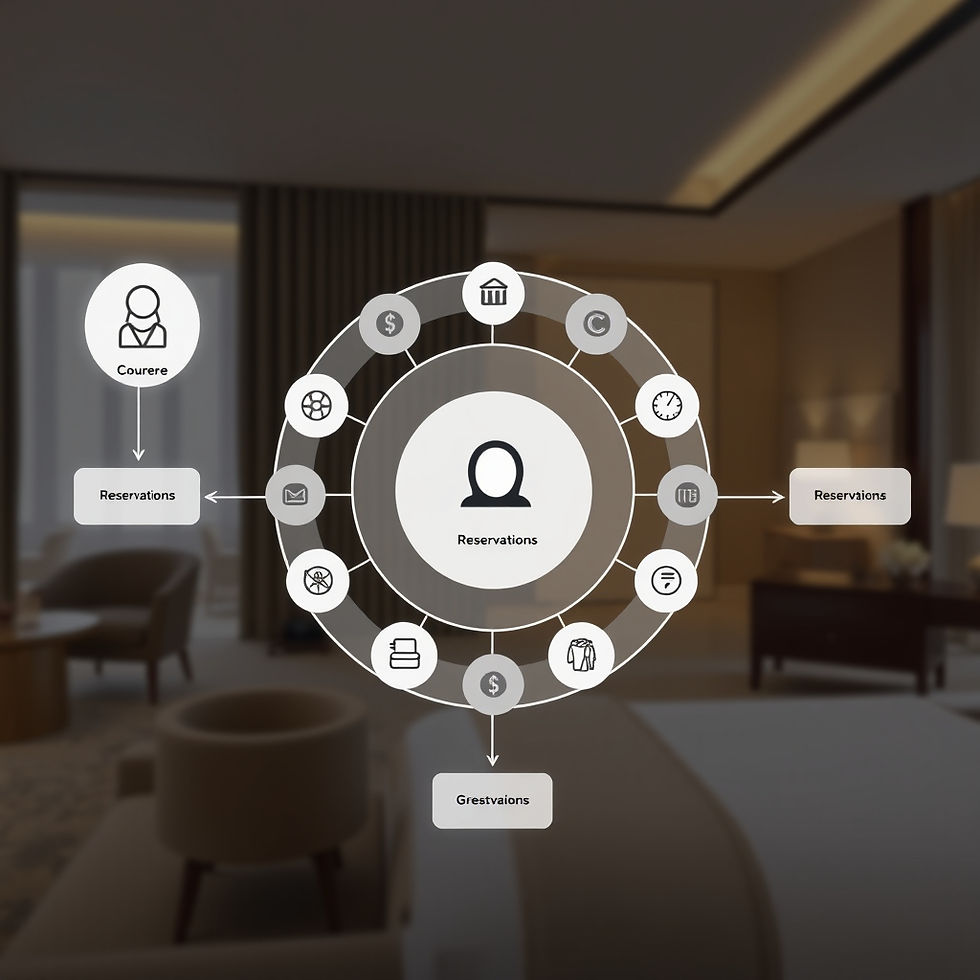
The AI orchestration layer integrates revenue, guest experience, and operations into a cohesive ecosystem. It enables:
Real-time data sharing across layers for coordinated decision-making.
Automated adjustments in pricing, staffing, and guest communication based on live demand.
Predictive analytics to anticipate operational challenges.
Continuous learning to improve responses during events like the World Cup.
This layer acts as the central nervous system, ensuring all components work together smoothly during occupancy spikes and operational pressure.
How AI-Enabled Hospitality Ecosystems Respond During the FIFA World Cup 2026

Imagine a hotel near a World Cup stadium. As match days approach, occupancy surges and pricing needs rapid adjustment. The AI orchestration layer signals the revenue intelligence layer to increase rates dynamically. Simultaneously, the guest experience layer sends personalized welcome messages with event details and transport options.
Operational intelligence ramps up housekeeping and maintenance staffing automatically, ensuring rooms are ready on time. AI agents monitor guest requests and resolve common issues without human intervention, reducing staff overload.
This integrated approach prevents revenue loss, enhances guest satisfaction, and maintains smooth operations despite the event’s intensity.

How We Can Help
Strategic Recommendations for Hospitality Leaders
Our services and solutions can help you with the following
Adopt a layered AI ecosystem that connects revenue, guest experience, and operations for real-time coordination.
Invest in dynamic pricing tools like Lodgify to capture maximum revenue during demand surges.
Enhance guest communication with AI-powered digital concierge platforms such as Softr to reduce manual workload.
Automate operational workflows using platforms like ClickUp combined with AI agents to improve efficiency.
Prepare for demand spikes by integrating predictive analytics and AI orchestration to adjust resources proactively.
Train staff on AI tools to ensure smooth adoption and maximize benefits during high-pressure events.
Final Thoughts
The FIFA World Cup 2026 will test hospitality providers’ ability to manage revenue, guest experience, and operations under intense pressure. Traditional systems fall short due to fragmentation and manual processes. A layered AI-enabled hospitality ecosystem offers a clear path forward, enabling hotels and resorts to respond swiftly and effectively to demand surges.
Hospitality leaders who embrace this approach will not only protect revenue and improve guest satisfaction during the World Cup but also build resilient operations for future challenges. The time to invest in AI-driven ecosystems is now, ensuring your property thrives when demand peaks.
Ready for FIFA World Cup 2026?
The World Cup will not simply test occupancy capacity.
It will test the effectiveness of your revenue systems, operational workflows, guest experience infrastructure, and AI readiness.
If your organization is experiencing:
• Revenue leakage
• Disconnected hospitality systems
• Manual operational processes
• Guest communication bottlenecks
• Pricing inefficiencies
• Lack of AI adoption
• Difficulty scaling during peak demand periods
Now is the time to act.
Schedule a personalized consultation to assess your organization's readiness for FIFA World Cup 2026 and identify opportunities for:
✓ Revenue optimization
✓ Hospitality AI transformation
✓ Systems integration
✓ Guest experience automation
✓ Operational intelligence
✓ AI-powered revenue operations
Discover how an integrated AI-enabled hospitality ecosystem can help your organization maximize revenue, improve guest satisfaction, and operate more efficiently during major demand events.
About SUSTAINEVOLVE

Esperanza Arellano, is the Founder & CEO at SUSTAINEVOLVE. She combines deep hospitality operations experience with nearly two decades of technology transformation leadership.
She has spent almost a decade working directly within hospitality revenue operations teams, helping organizations improve occupancy performance, revenue optimization, and operational effectiveness.
In addition, she brings more than 18 years of experience leading technology go-to-market, revenue operations, digital transformation, and AI adoption initiatives.
Her specialization focuses on helping organizations modernize operations through AI-enabled systems and integrated business processes.
Professional Credentials:
Her work focuses on helping hospitality organizations identify revenue leakage, eliminate system fragmentation, improve operational efficiency, and build practical AI transformation roadmaps.


Comments